Trusted Health Answers

Ask health questions and get clear answers drawn from charities, patient-information sites and medical bodies, with every source shown so you can check it yourself. Advoca is built by doctors, and answers are matched to your condition and region, not the open web.

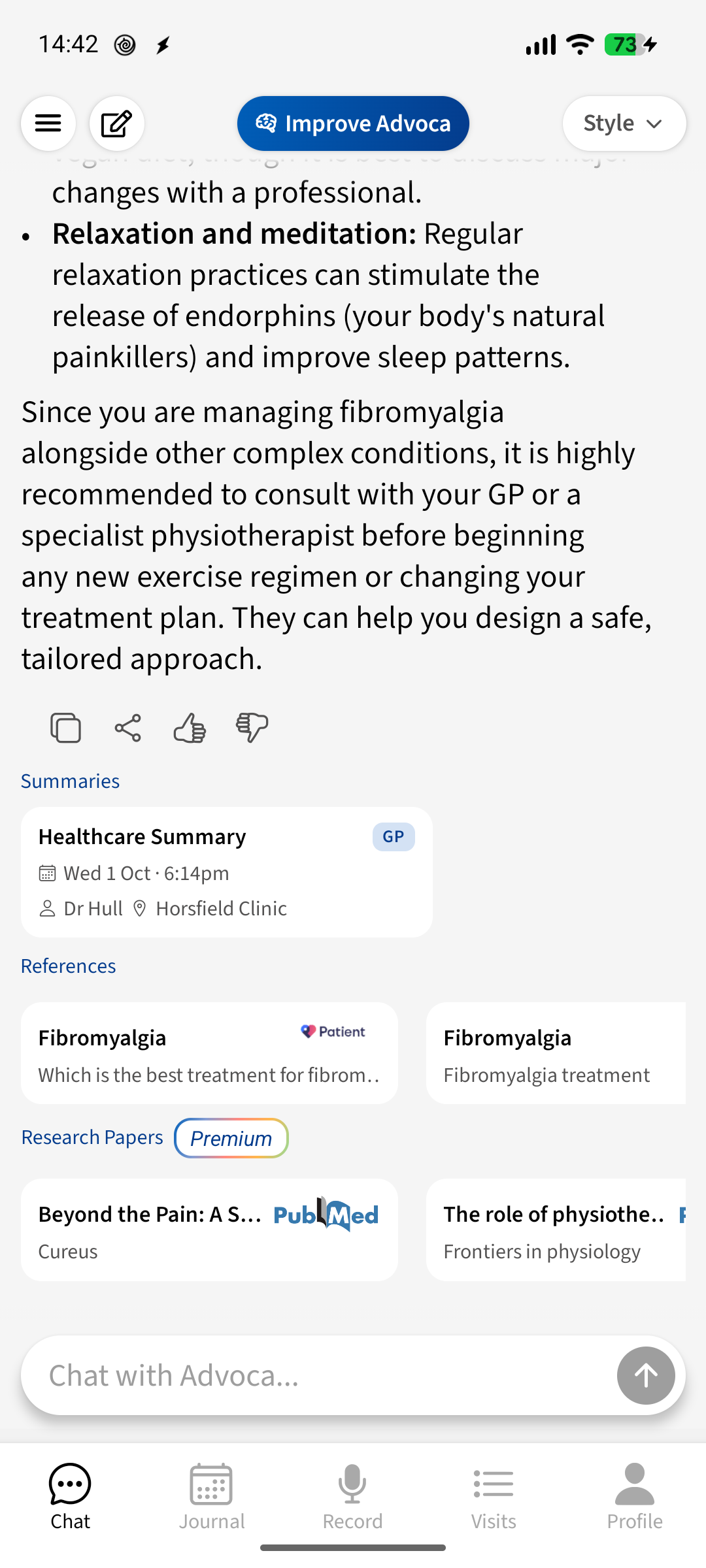
Advoca trusted answer showing a fibromyalgia answer summary, cited references and a related appointment card
Download on the App StoreGet it on Google Play4.8 across 35 ratings
Built by NHS doctors Free to use GDPR compliant & HIPAA aligned
Written by Dr Shyam Dhokia, MB BChir Reviewed by Dr Michael Trueman, MB ChB Last reviewed
What it is

Trusted answers to your health questions

Advoca gives clear answers to health questions using curated charities, patient-information websites and medical sources, not the open web. Every answer shows its citations, so you can see where it came from and check it for yourself. It's a starting point for understanding, and something to bring to your doctor, not personal medical advice.

“An infodemic is too much information including false or misleading information… It causes confusion and risk-taking behaviours that can harm health.”
Sources: World Health Organization, 2025. In the US, 58.5% of adults looked online for health or medical information (CDC/NCHS, 2023). In the UK, 76% of adults use the internet for health and wellbeing, with 35% looking up symptoms (Ofcom, 2025).
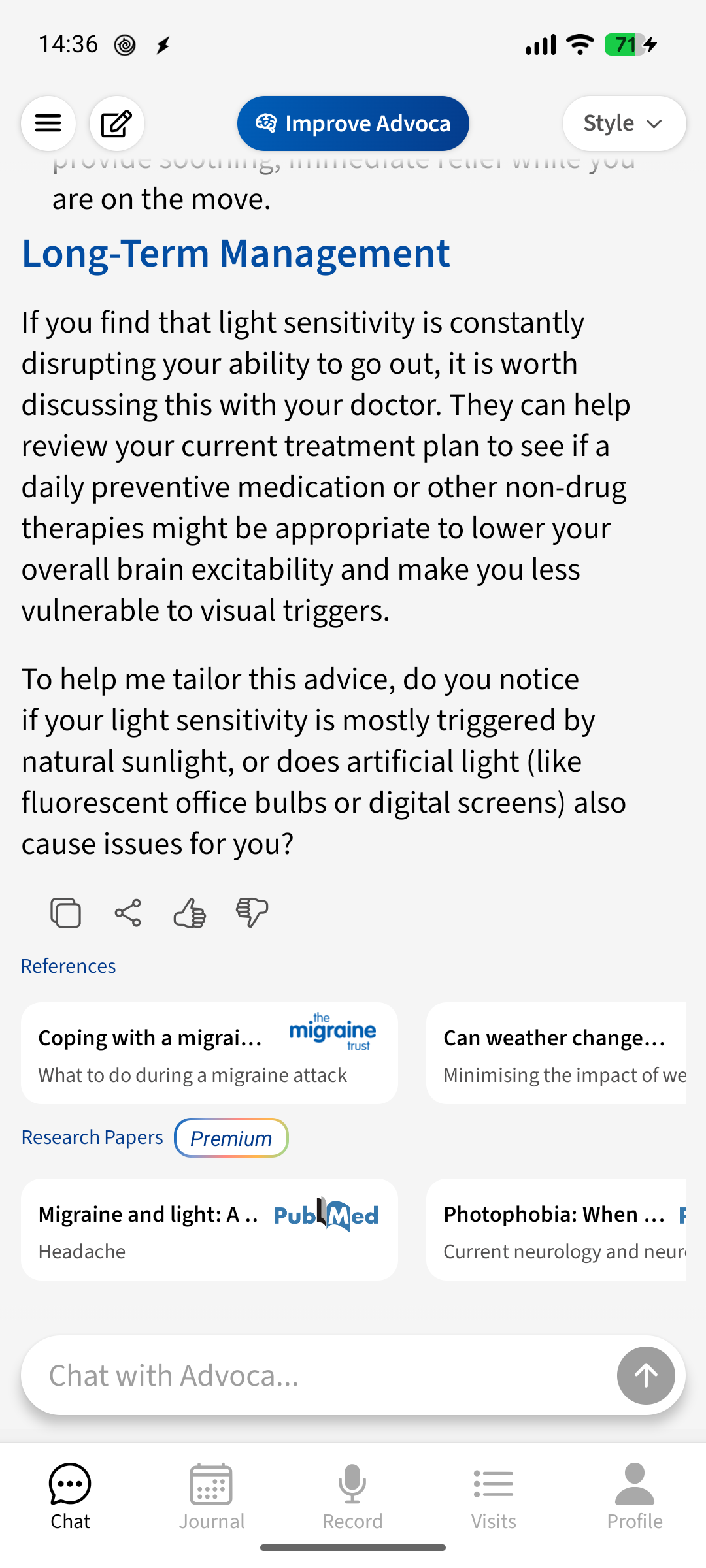
Advoca answering a migraine light-sensitivity question with cited source cards and references
TRUST OVER DR GOOGLE

Not Dr Google, and not a guess

Many people look online for health information: 58.5% of US adults look up health information, and 35% of UK adults look up symptoms. The WHO warns that false and misleading health information causes confusion and real harm. Advoca only answers from curated charities, patient-information sites and medical bodies, and shows you where each answer came from so you can check it yourself.

  • Curated sources, not the open web: charities, patient-information sites and medical bodies, so you're not left guessing what's reliable.
  • Check it yourself: every answer lists its sources, so you can read the evidence behind it, not just take our word.
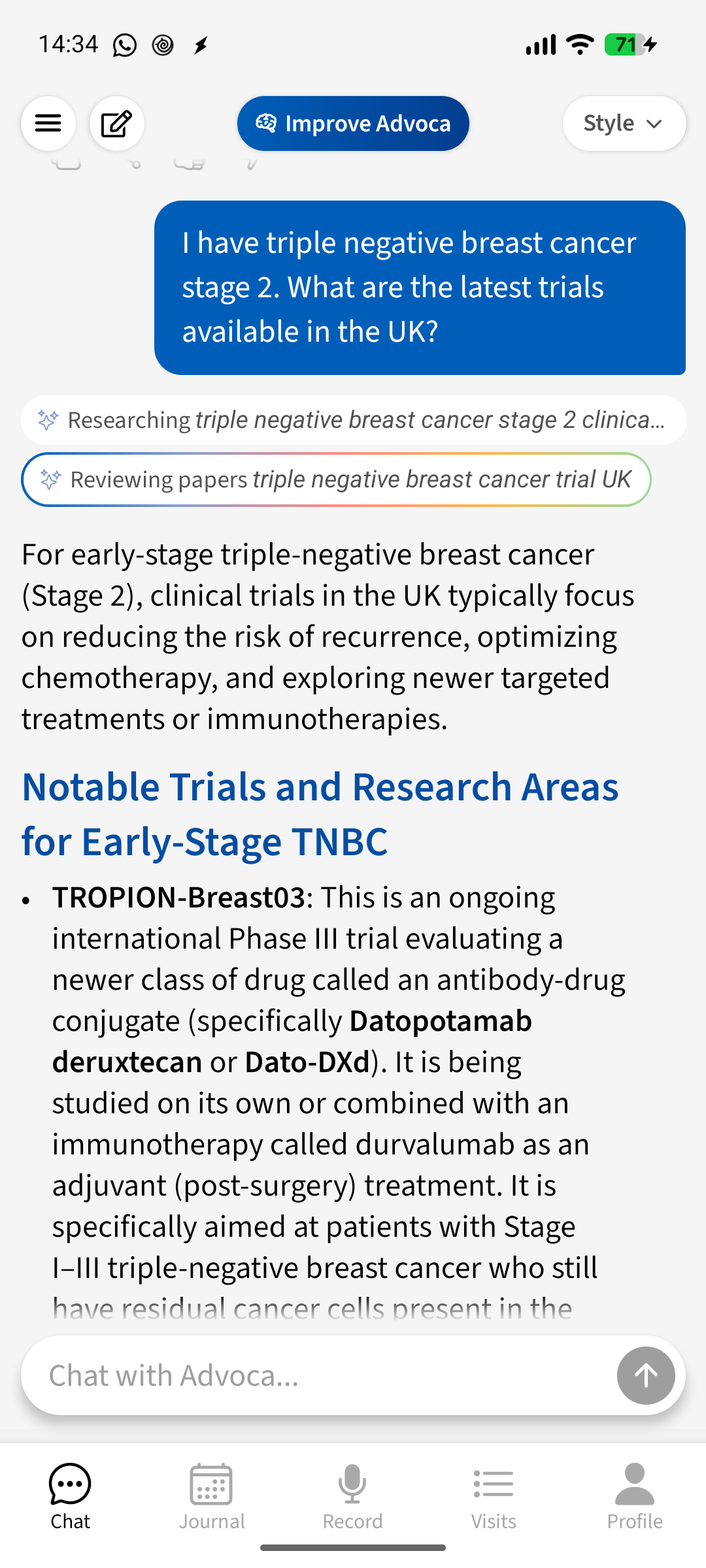
Advoca answering a stage two triple-negative breast cancer question with cited UK clinical trial sources
MATCHED TO YOU

Answers that fit your situation

Generic health pages don't know what you're going through. Advoca's answers are matched to your condition and stage, so there's less chance of seeing information that could misinform, cause distress, or simply not apply to you. Ask a stage-2 breast-cancer question and you get an answer relevant to stage 2, not a generic cancer page that might describe the wrong stage's outlook.

  • Matched to your condition and stage: answers fit where you are, instead of a one-size-fits-all page that may not apply.
  • Chosen with your situation in mind: helps avoid sources that could mislead or upset you.
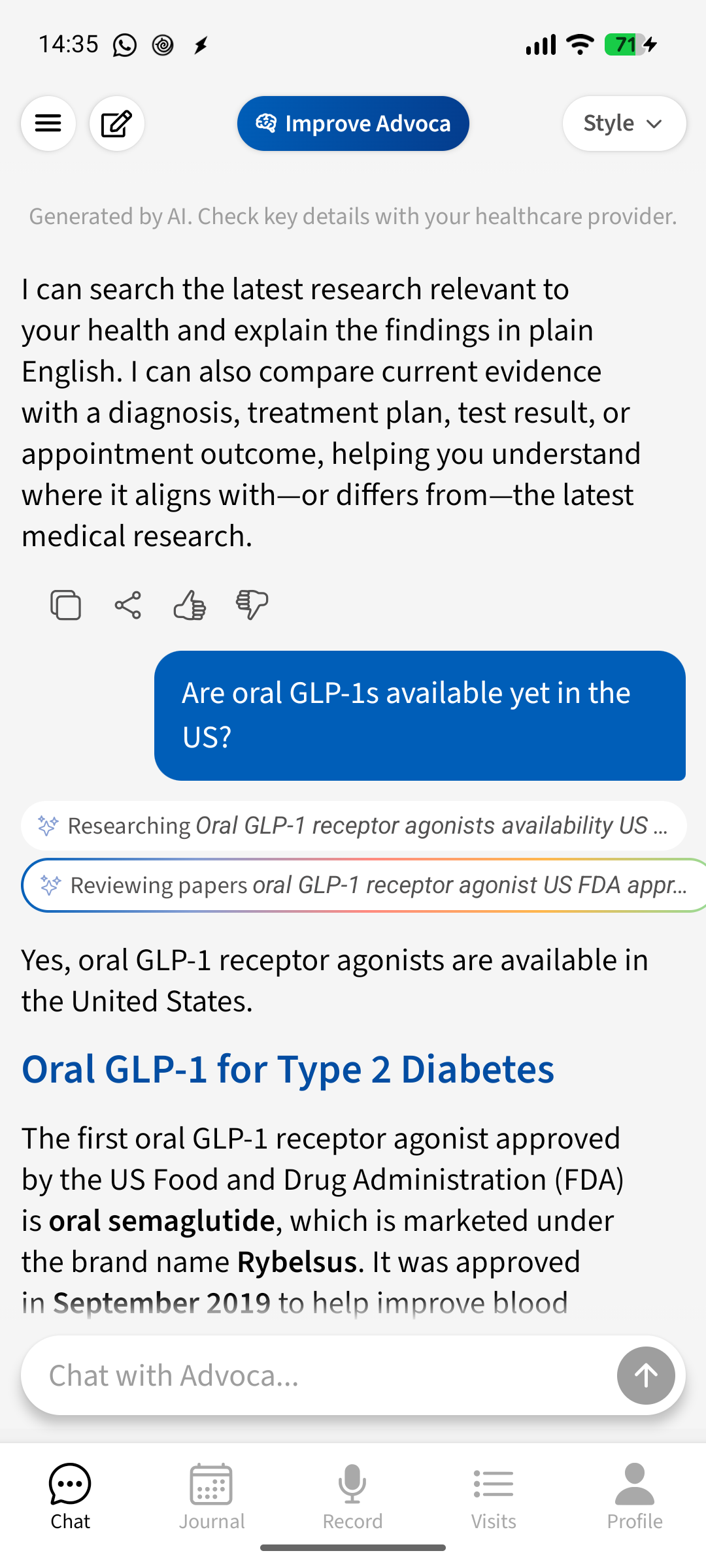
Advoca answering a region-specific oral GLP-1 availability question with cited source cards
BESPOKE, NOT GENERIC

From sources that fit where you are

Health guidance varies by country. A treatment available under one healthcare system may not be available under another. Advoca's answers draw on sources chosen for your region and condition, so the guidance matches your healthcare context. Ask about an oral GLP-1's availability and you get a region-relevant answer, not another country's approval.

  • Sources for your region: UK users see NHS and charity sources; US users see CDC and medical-centre sources, not a single country's guidance.
  • Answers that apply where you live: asking about a treatment's availability gets a region-relevant answer.
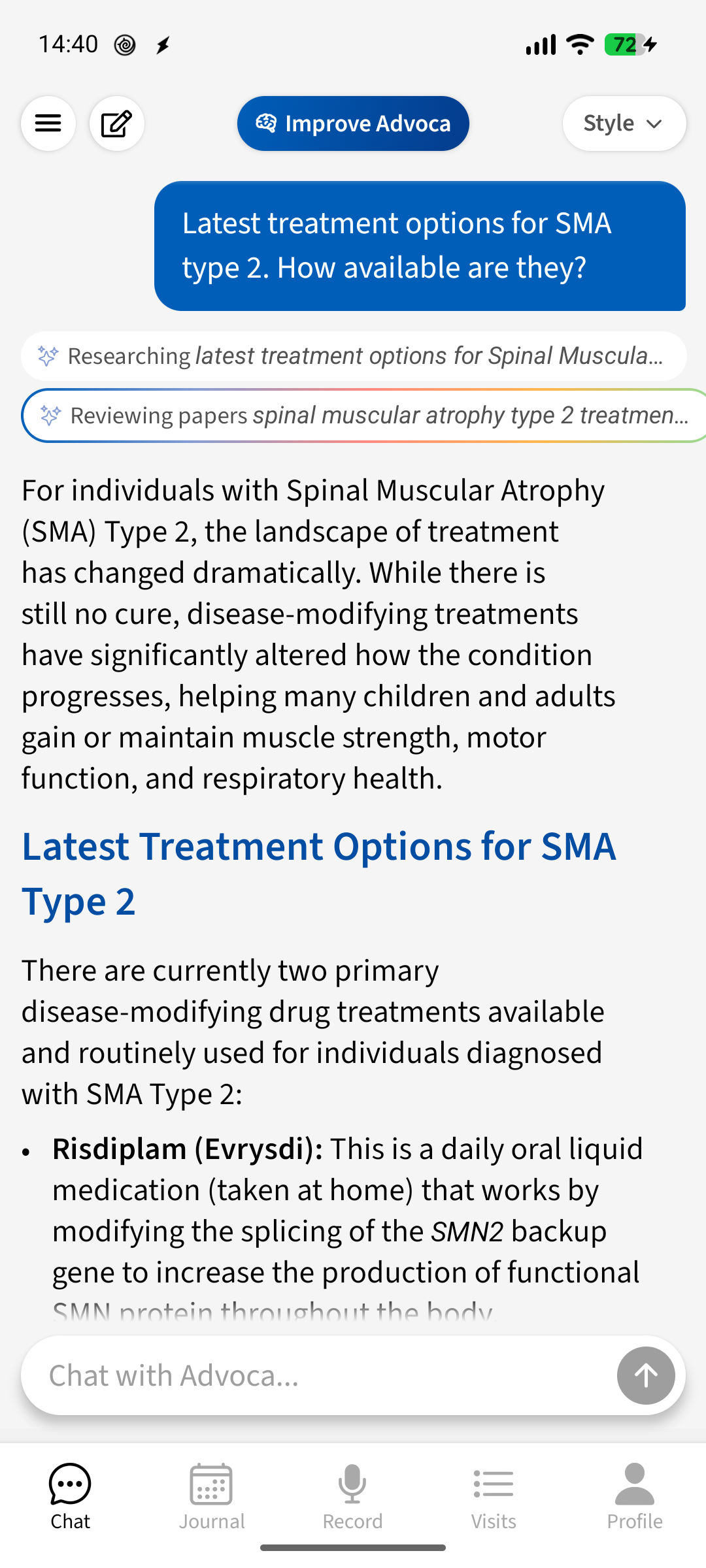
Advoca answering a question about SMA type 2 treatment options with cited medical sources
ANY QUESTION

From the everyday to the specific

Whether it's "is this normal?" or the latest treatment for a rare condition, Advoca looks in trusted sources for your actual question, including the niche ones that search engines bury. Ask about the newest treatment options for SMA type 2 and it searches trusted medical sources, not generic overviews.

  • Everyday questions answered: “is this normal?” gets a clear, cited answer from trusted sources, not a guess.
  • Niche and rare questions taken seriously: it searches trusted sources for your specific question, not the generic page that ranks first.
HOW IT WORKS

From question to a trusted answer in three steps

  1. 1Ask in your own wordsType any medical question, from “is this normal?” to the latest treatment for your condition. There's no form and no right way to phrase it.
  2. 2Get a cited answer, matched to youAdvoca searches curated charities, patient-information sites and medical bodies chosen for your condition and region, and writes a clear answer. It shows the source cards behind it so you can check them for yourself.
  3. 3Check the sources, then bring it to your doctorRead the citations, follow up on anything that matters, and take the question and your answer to your next appointment. It's a starting point for understanding, not personal medical advice.
WHO IT'S FOR

Great for whatever you're managing

Whatever your condition, Advoca meets you where you are. Find the page built for your situation.

WHY ADVOCA

Why Advoca instead of Dr Google or a generic chatbot

Most health answers online come from whatever ranked first, with no fit and often no sources. Here's how Advoca is different.

AdvocaDr Google / generic chatbots
Every answer cited to a real sourceYes. Every answer shows the charities, patient-information sites and medical bodies it came from, so you can check it for yourself.Rarely. Search results rank whatever surfaced first; generic chatbots may give no sources at all.
Matched to your condition and stageYes. Answers fit your situation, so there's less chance of seeing the wrong stage's outlook or the wrong condition.No. You get the same generic page everyone else does, including information that may not apply.
Sources for your regionYes. UK users see NHS and charity sources; US users see CDC and medical-centre sources, not one country's guidance.No. Search results can mix countries, so a UK user may get US advice, and vice versa.
Answers niche and rare questions tooYes. It searches trusted sources for your actual question, even the latest treatment for a rare condition.Rarely. Search engines bury niche questions; generic chatbots can fall back on generalities.

Your questions, answered

Is it free?

Yes. Everything you need to ask questions and get trusted answers is free when you join our research community. Joining means letting us share your fully anonymised data to help advance research into conditions like yours; you use the app as normal, and when your data is matched to a study, you share in the reward. You can opt out at any time. If you'd rather not take part, our optional premium tier gives you full access without joining, and unlocks extra features like research-paper search.

Is it better than googling my symptoms?

For many health questions, yes. Search results can mix countries and quality, including what the WHO calls an “infodemic” of false and misleading information. 58.5% of US adults look online for health information, and 76% of UK adults use the internet for health and wellbeing, with 35% looking up symptoms. Advoca answers only from curated charities, patient-information sites and medical bodies, and shows you the source behind every answer so you can check it yourself.

Where do the answers come from? Can I trust them?

Advoca's answers come from curated charities, patient-information websites and medical bodies chosen for your region and condition, not the open web. Every answer shows its citations, so you can see where it came from and read the source yourself. It isn't perfect and isn't personal medical advice, so check anything important with your clinician.

Does it know about my specific condition or rare disease?

Yes. Advoca uses the condition you tell it about, so answers are matched to your situation rather than a generic page. It searches trusted sources for your actual question, even niche ones, such as the latest treatment options for a rare condition like SMA type 2. You're the expert on your own condition; Advoca looks in the right places so you can go deeper.

Is it like asking a generic chatbot about my health?

No. Generic chatbots may answer from the open web with no sources and no knowledge of your situation. Advoca answers from curated medical sources matched to your condition and region, shows you every citation, and is built by doctors. It's not personal medical advice, and it can occasionally get things wrong, so we always show you the sources behind an answer and recommend checking anything important with your clinician.

Medical disclaimer

Advoca helps you record, understand and organise your care. It is not a substitute for professional medical advice, and it does not diagnose conditions or make treatment decisions — always speak to a qualified healthcare professional.

How the AI works

Advoca's assistant transcribes, summarises and explains your health information, grounded in trusted medical sources and overseen by our clinical team. It does not diagnose or replace your doctor — and, like any AI, it can occasionally get things wrong, so we always show you the sources and full transcript behind its answers.

Become an expert on your own care.

Free to download, built by doctors, and private by design. Start in minutes.

Download free