Research Review

Understand the research behind your care — Advoca searches published medical studies and explains what's relevant in plain language, so the evidence is yours, not locked behind jargon. A Premium feature, inside an app that's free to use.

Research review searching a condition and explaining a study in plain language

Download on the App StoreGet it on Google Play4.8 across 35 ratings
Built by NHS doctors Free to use GDPR compliant & HIPAA aligned
Written by Dr Shyam Dhokia, MB BChir Reviewed by Dr Michael Trueman, MB ChB Last reviewed
What research review is

The evidence behind your care, explained in plain language

Research review searches published medical research and explains what it finds in plain language — so you can understand the studies behind a treatment, a diagnosis or a question you've been carrying, without needing a medical degree to read them. It draws on peer-reviewed abstracts from PubMed, the same database doctors read, and turns what's relevant into an answer you can actually use. This is a Premium feature. The rest of Advoca — recording appointments, journaling your health and asking trusted questions — stays free.

In 2019 alone, nearly 80 systematic reviews of medical research were published every day — a more than twentyfold rise in two decades. No patient can read all of that, which is exactly why making sense of the evidence on your own condition now needs help.
Source: Hoffmann F, Allers K, Rombey T, et al., Journal of Clinical Epidemiology, 2021 (peer-reviewed bibliometric study).

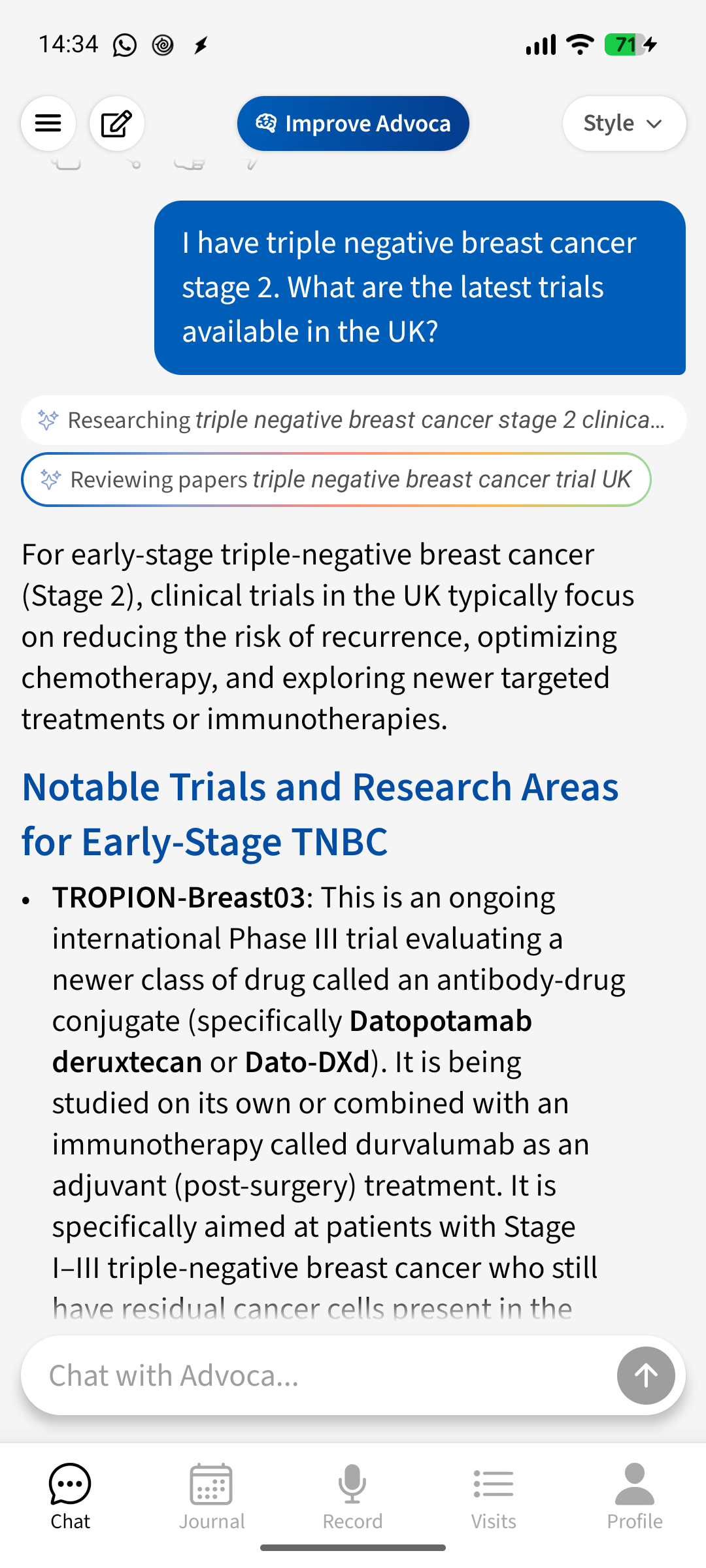
A PubMed search returned for your condition, in the research-review panel

Trusted sources

Search real medical research — not the open web

When you search a condition online, the first results are blog posts, forums and clinic pages — not evidence. Research review goes to PubMed, the free database of peer-reviewed medical research that doctors read, and pulls the abstracts that actually relate to your question. You read what the studies found, from where they were published — not a stranger's summary of a summary.

  • Peer-reviewed evidence, not opinion. Every search draws on published research abstracts from PubMed, the database doctors themselves use.
  • No more Dr Google. Stop wading through forums and listicles, and go straight to the studies.

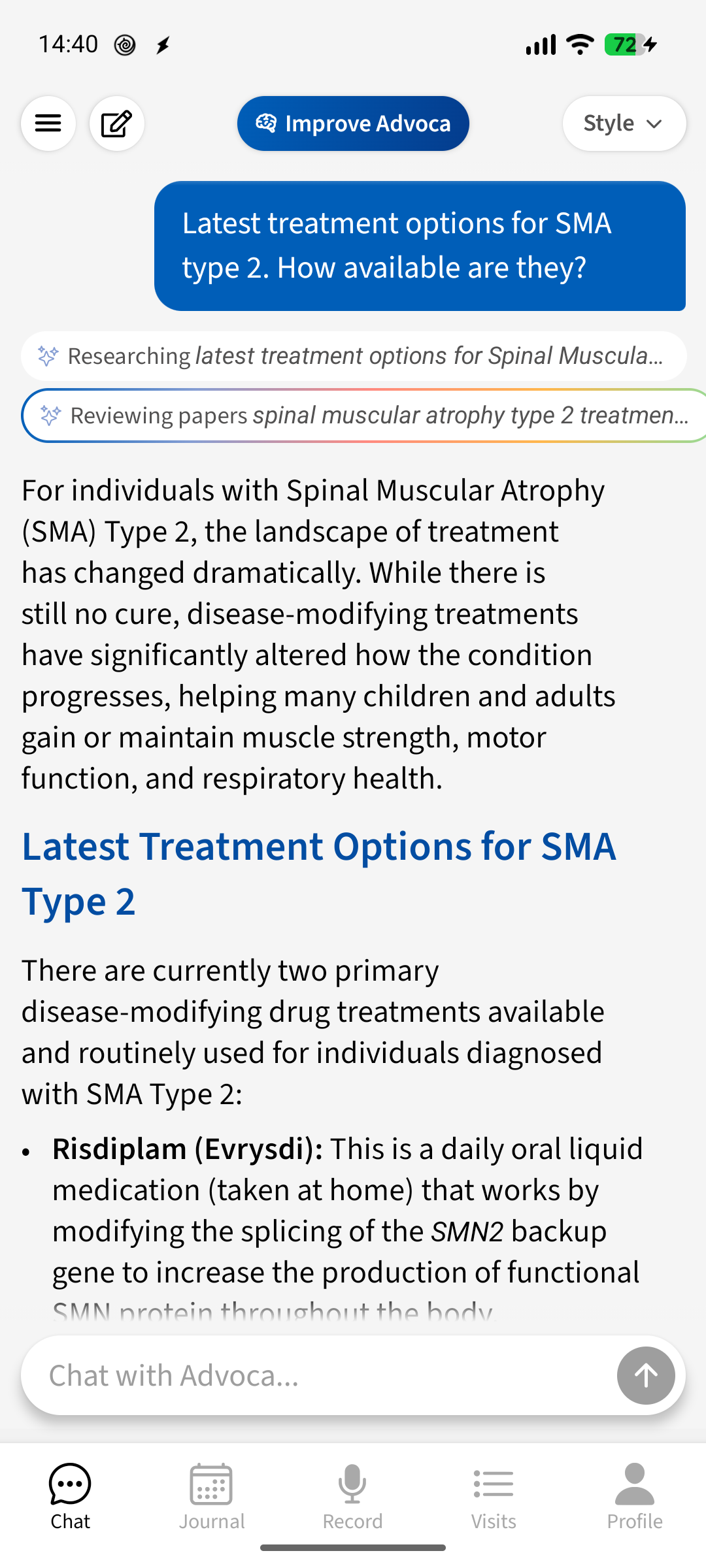
A research abstract rewritten as a plain-language explanation, with the Simple / Detailed toggle

In plain language

Get the research explained — actually explained

A peer-reviewed abstract is dense with jargon: “randomised controlled trial,” “hazard ratio,” “confidence interval.” Research review reads it and explains what's relevant in plain language, so the findings are useful to you, not just to a researcher. If you want the short version, switch to Simple (written for a reading age of around eleven); if you want everything, leave it on Detailed. Either way, nothing stays hidden behind terms you'd have to look up.

  • Choose how much detail. Switch between a Simple, plain-language explanation and a Detailed one that keeps all the facts — your call.
  • Jargon, decoded. Terms like “randomised controlled trial” or “confidence interval” are explained in the answer, not left for you to untangle.

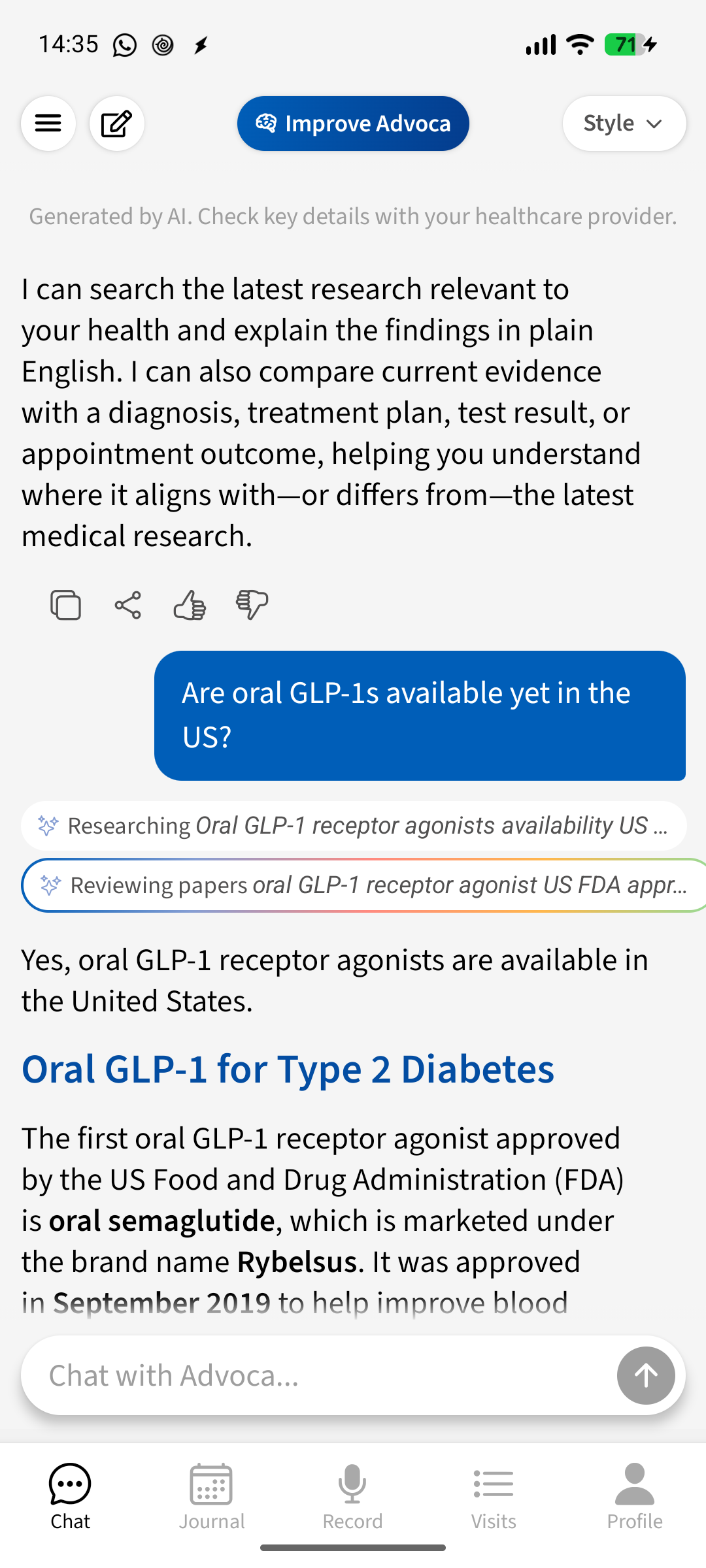
Asking about a study in the context of your own conditions and care

In your context

Ask in the context of your own care

Research review doesn't sit on its own. It lives inside your chat, which already knows your conditions, your appointments and your journal — so when you ask about a study, you can ask it in the context of your own situation: “Is this treatment relevant to my migraines?” or “What does the latest research say about my medication?” So the answer relates to your own care, not a generic reply meant for no one in particular.

  • Research tied to your situation. Because it sits within your chat, you can ask whether a study is relevant to your condition, your medication, your history.
  • One place, one answer. Your research questions and the rest of your care — journals, appointments, trusted questions — all live together.

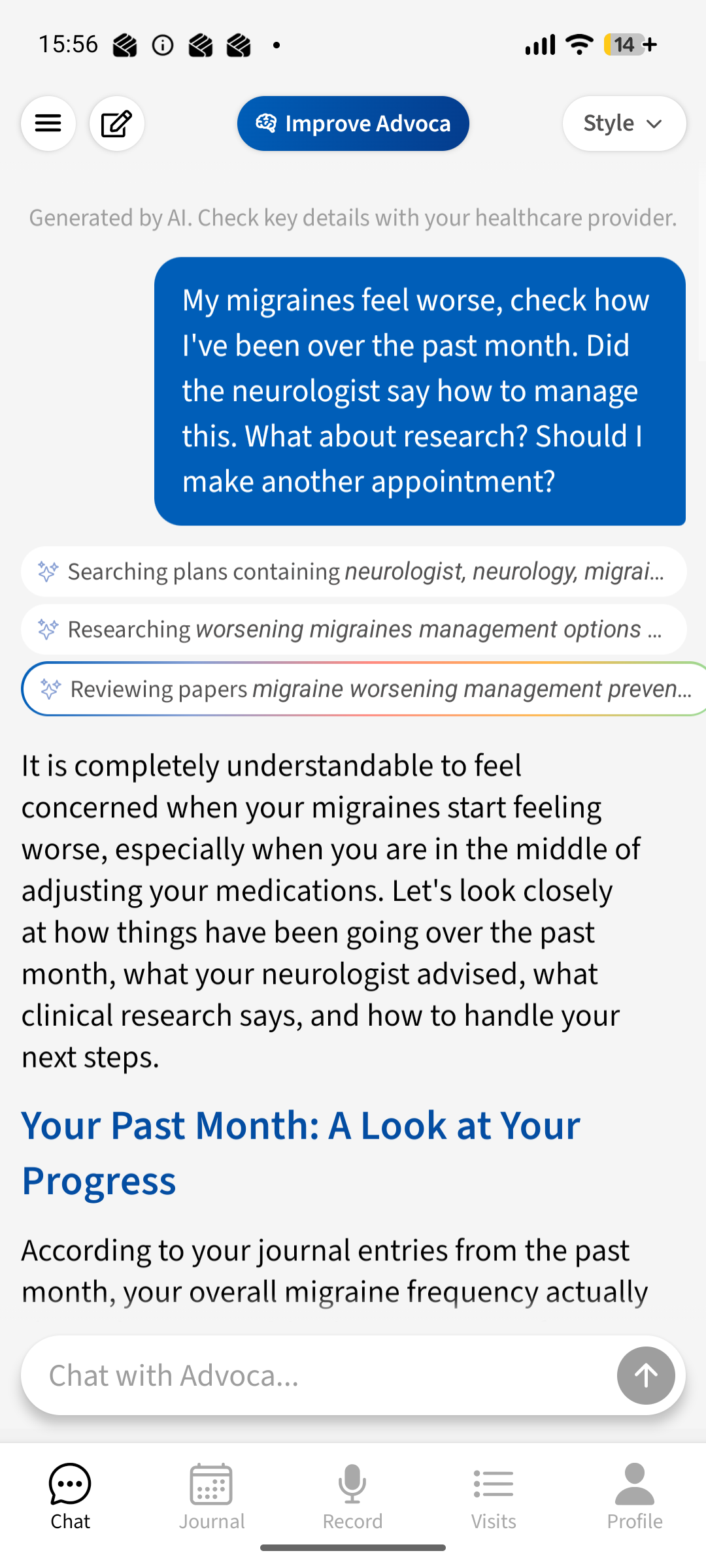
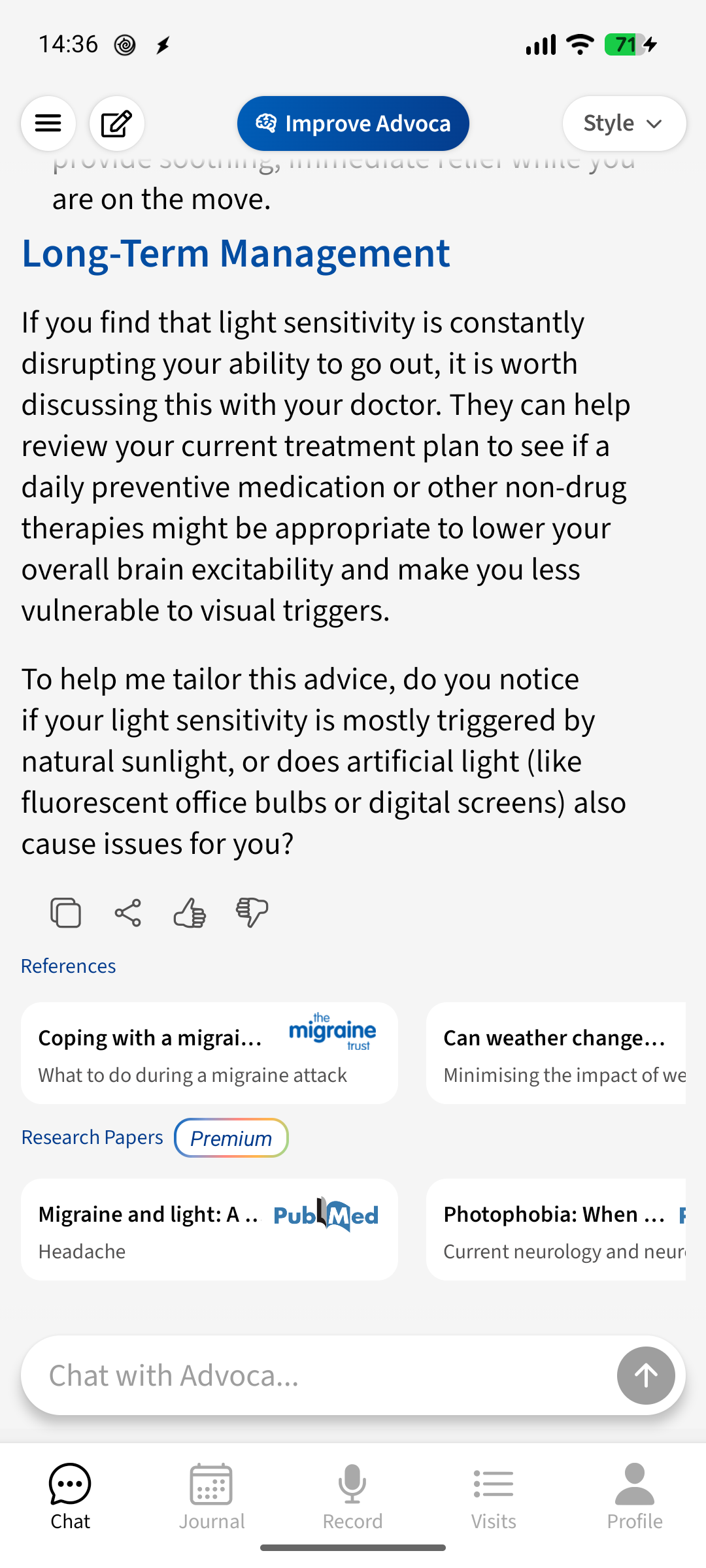
Cited source cards shown beneath a plain-language research answer

See the sources

Every answer shows where it came from

You should never have to take a health answer on trust alone. Every research-review answer shows the studies it drew on, with the sources listed right there in the chat — the journal, the title, the link — so you can read further, check the finding for yourself, or take it to your next appointment and discuss it with your clinician. Think of it as a starting point for reading and a question for your doctor, never as personal medical advice.

  • Check it for yourself. Every answer lists the PubMed studies behind it, so you can read further or verify the finding.
  • Bring it to your doctor. Show your clinician the research you found, so the conversation starts from evidence you can both see.
HOW IT WORKS

From question to understood, in three steps

  1. 1Ask your research questionIn chat, ask about a treatment, a diagnosis or a study you heard about — for example, “What does the latest research say about this medication for migraine?” Ask it in the context of your own condition if you like.
  2. 2It searches and reads the researchAdvoca searches published, peer-reviewed research on PubMed, reads the abstracts relevant to your question, and explains what it finds in plain language — at the level of detail you choose.
  3. 3Read it, check the sources, ask your doctorGet a plain-language answer that shows which studies it drew on, so you can read further, verify the finding for yourself, or take it to your next appointment and discuss it with your clinician.
WHO IT'S FOR

Great for understanding the research behind your condition

If you're navigating a condition where the evidence really matters, research review is built for that. Find the page made for your situation.

IN THEIR WORDS

Research, made readable

Why researching with Advoca beats going it alone

You can search medical research yourself — but reading it is the hard part. Here's how research review changes that.

AdvocaSearching PubMed or Dr Google yourself
Where the evidence comes fromPublished, peer-reviewed abstracts from PubMed — the database doctors read.A mix of blogs, forums, news and clinic pages — quality varies wildly.
Understanding what you findExplained in plain language, with jargon defined and a Simple or Detailed option.Raw abstracts full of jargon you'd need a medical degree to parse.
Relevance to your careAsked inside your chat, in the context of your conditions, medications and history.A standalone search that has no idea who you are or what you're dealing with.
Checking the sourceEvery answer shows the studies it drew on, so you can verify or show your doctor.You're on your own — and often can't tell a strong study from a weak one.

Your questions, answered

Is research review free?

No — research review is a Premium feature. The app itself is free to download and use: you can record appointments, keep a journal, plan visits and ask trusted questions without paying. Searching and explaining published medical research is part of our optional Premium tier. You can get Premium by subscribing, or by joining our research community (sharing your fully anonymised data to help advance research into conditions like yours), which also unlocks Premium features. Either way, the rest of Advoca stays free.

What's the difference between research review and Advoca's trusted answers?

Our trusted-answers feature responds to everyday health questions using charities, patient-information sites and medical bodies — clear, reliable explanations of the basics. Research review goes deeper: it searches peer-reviewed research papers on PubMed and explains what the studies actually found, in plain language. Reach for trusted answers when you want to understand a condition or symptom; reach for research review when you want to dig into the published evidence itself.

Can I trust the research it finds?

Research review searches PubMed, a free public database of peer-reviewed medical research, so what it finds is published science — not blog posts. It explains the findings in plain language and shows you the studies behind every answer, so you can read further or check for yourself. It's a starting point for understanding the evidence, not personal medical advice: it works from abstracts rather than full papers, it can't read every study ever published, and like any tool it can occasionally get things wrong. Always check anything important with your clinician.

Does research review give me medical advice?

No. Research review explains what published research found, in plain language. It does not diagnose conditions, recommend treatments, or make decisions for you. It's a way to understand the evidence so you can ask better questions and have a more informed conversation with your healthcare team. Treatment decisions are always for you and your clinician to make together.

Does research review work the same in the UK and the US?

Yes — research review works the same wherever you are, because it searches PubMed, a free public database of medical research that anyone can access. What differs by region is how your app data is protected: GDPR across the UK and EU, and HIPAA-aligned plus applicable state data-protection laws in the US. Research review sends your research question and returns published abstracts; it doesn't store or share your personal health data differently depending on where you live.

Medical disclaimer

Advoca helps you record, understand and organise your care. It is not a substitute for professional medical advice, and it does not diagnose conditions or make treatment decisions — always speak to a qualified healthcare professional.

How the AI works

Advoca's assistant transcribes, summarises and explains your health information, grounded in trusted medical sources and overseen by our clinical team. It does not diagnose or replace your doctor — and, like any AI, it can occasionally get things wrong, so we always show you the sources and full transcript behind its answers.

Become an expert on your own care.

Free to download, built by doctors, and private by design. Start in minutes.

Download free