Ready for your appointment
The NHS advises writing down your symptoms, when they started and what makes them better or worse.
Everything you've told Advoca, turned into one clear report. Share it with your doctor, your family or take it to a benefits assessment.

 4.7 across 75 ratings
Appointments are short, and it's hard to remember every symptom, medicine and date when you're sitting in front of the doctor. If you've been using Advoca, writing in your journal, tracking symptoms and recording appointments, it's all already there. Health Reports puts it together in a few clear pages, ready to hand over.
The NHS advises writing down your symptoms, when they started and what makes them better or worse.
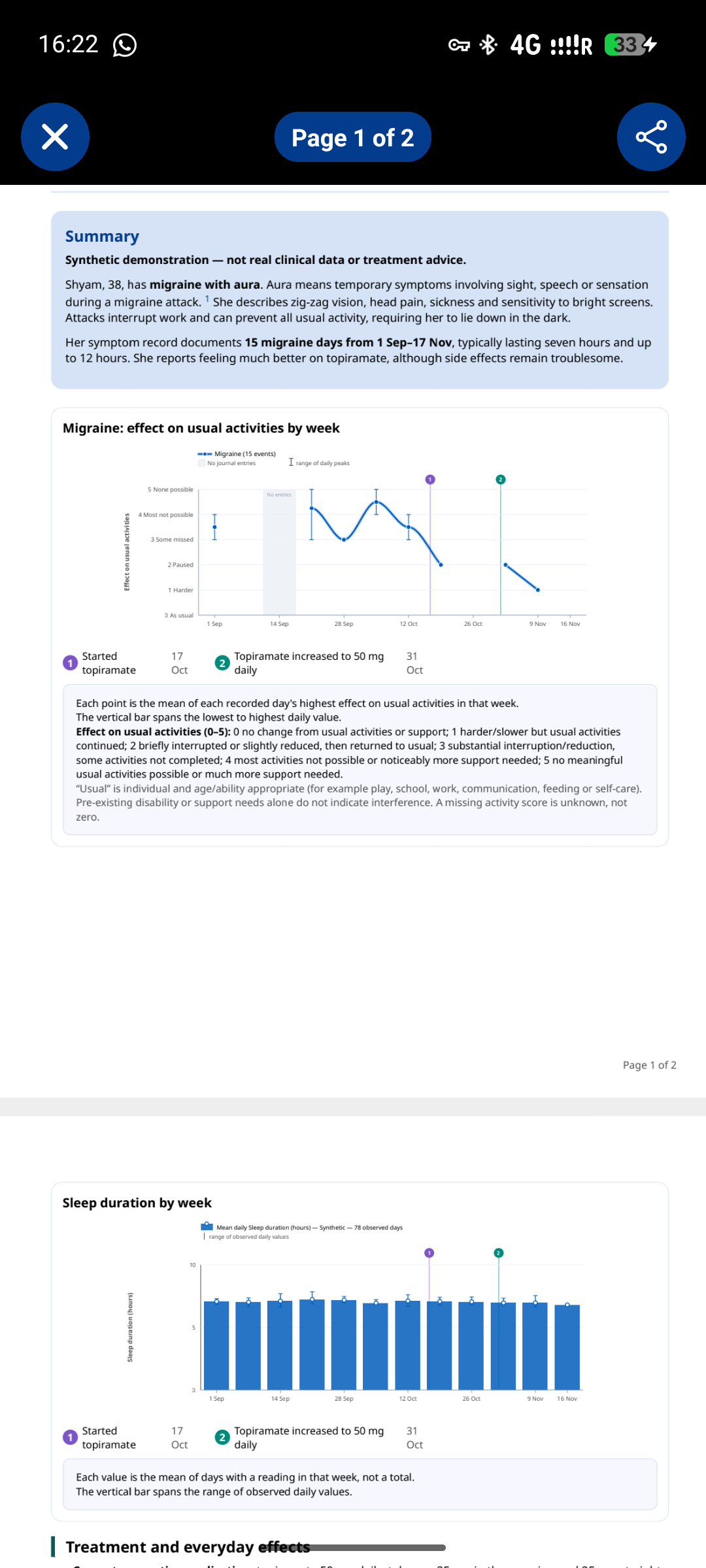
For PIP, assessors are asked to look at how often your condition changes and how many good and bad days you have.
In one US study, carers who were given a printed summary of a visit said they felt more prepared.
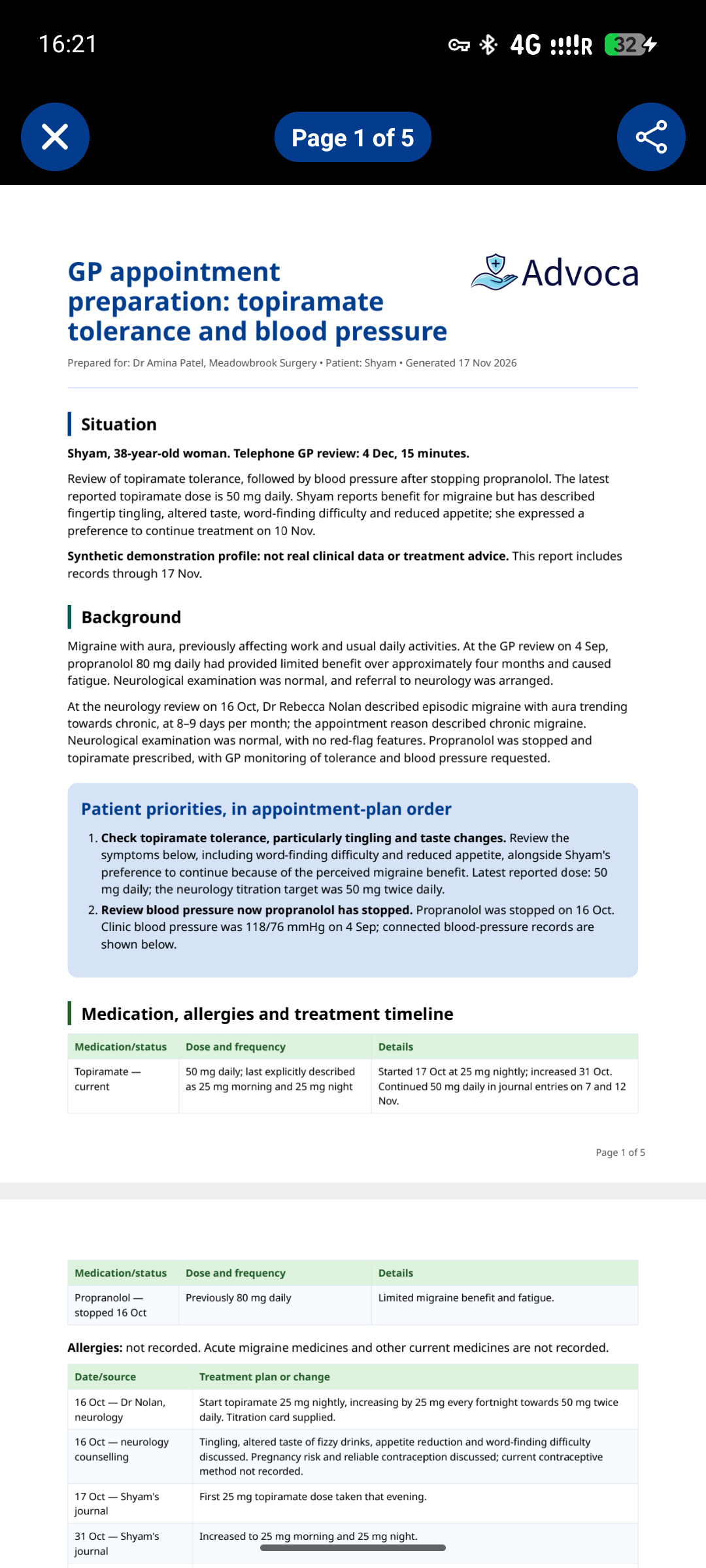
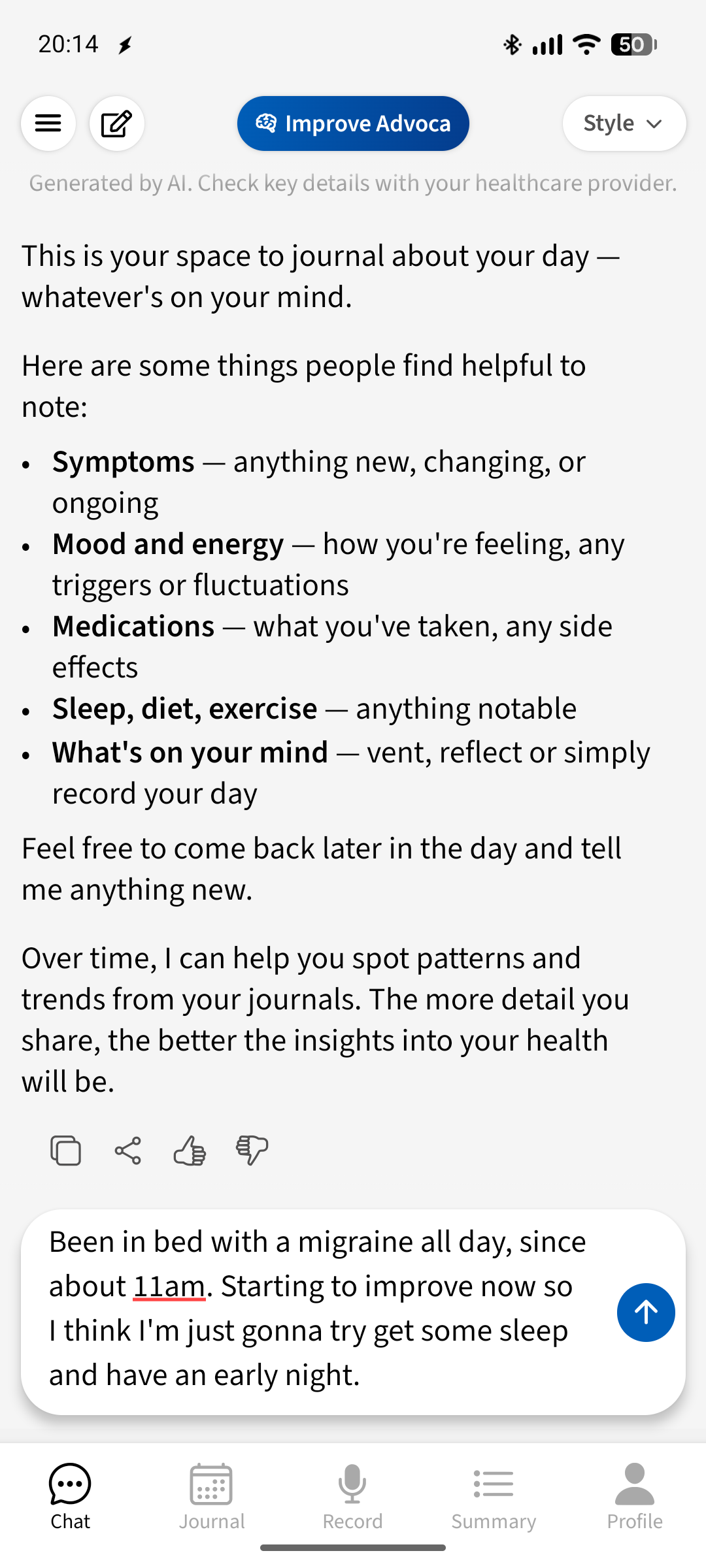
You don't need to start from scratch. Advoca uses what's already in your record: your journal, symptoms, past appointments, letters and even your smartwatch. Then it picks out what matters.

Your doctor sees the important things straight away: what's going on, what's changed and what you want to talk about. Your medicines and allergies are listed clearly, so nothing gets missed. If you've planned your appointment in Advoca, your questions are included in the order that matters most to you.
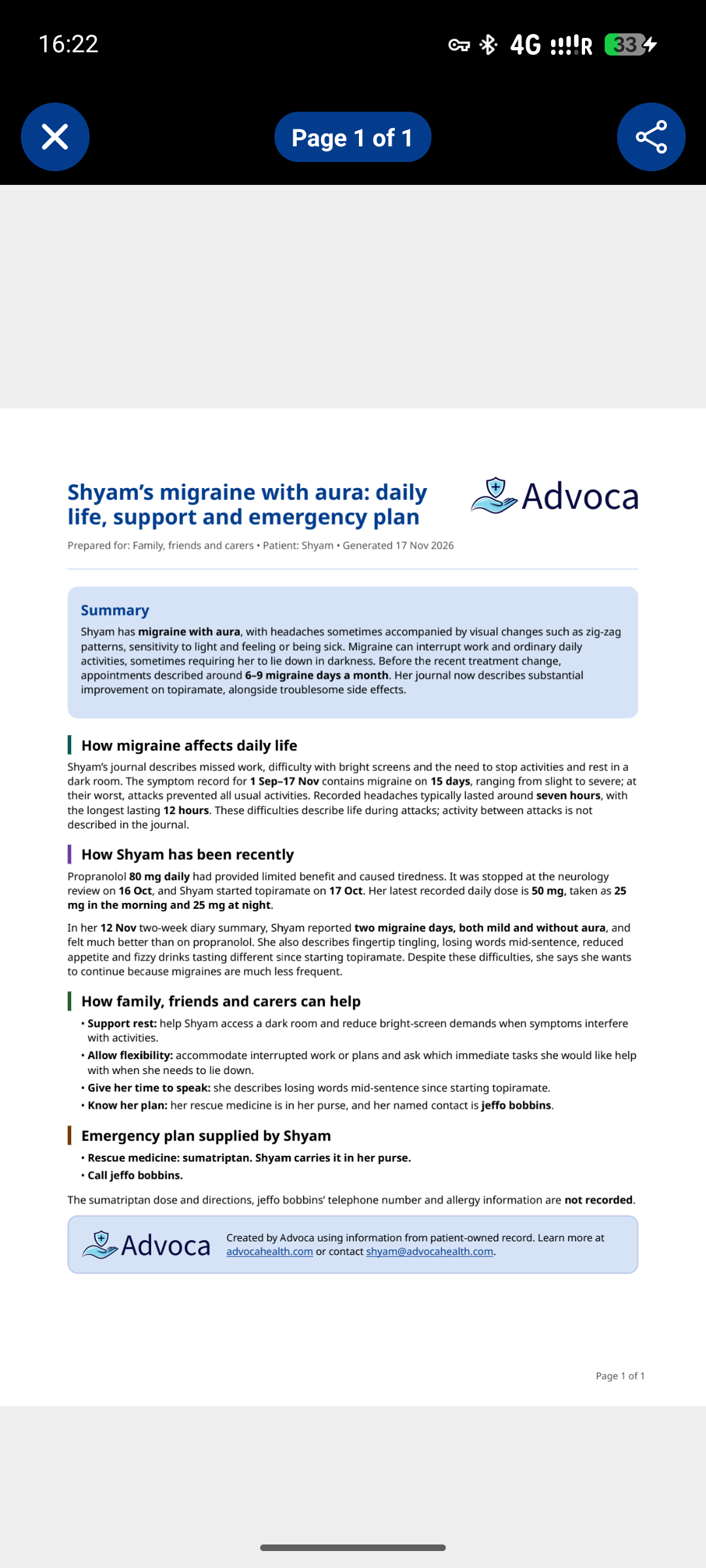
It isn't always easy to explain your health to the people close to you. Health Reports does it in plain, simple words, with no medical jargon. It covers how you've been, how your condition affects your day and how they can help.
Benefits assessments can be stressful. Health Reports helps you show how your health really affects everyday life: what you find hard, what you need help with and what your good and bad days look like. It uses the notes you've kept along the way.
Especially useful if you have a long-term condition, see lots of different doctors or simply have a lot to keep track of.
Advoca does the gathering and tidying for you.
| Advoca | Writing it yourself | |
|---|---|---|
| Getting started | Uses what you've already recorded | Hunting through notes, letters and memory |
| Who it's for | Written to suit your doctor, family or assessor | One set of notes for everyone |
| Keeping it up to date | Just ask for changes | Start again from scratch |
| Sharing | Send it from your phone in seconds | Print, scan or photograph it |
Health Reports is part of Advoca Premium. The app itself is free to download and use.
Only what's in your Advoca record: your journal, symptoms, appointments, letters, plans and connected devices, plus your medicines and allergies.
You choose: a short one- or two-page summary, or a fuller report of a few pages.
Yes. Choose "PIP or UC assessment" and the report focuses on how your health affects daily life, including your good and bad days. It won't tell you how many points you'll get or whether you'll qualify; that's always the assessor's decision.
Yes. Just ask in chat, for example "add my new medication" or "make it shorter", and Advoca updates it.
Only you. Advoca never sends it anywhere; you decide who to share it with.
No. It organises what you've recorded so others can understand it quickly. It doesn't diagnose or give medical advice.
Jot down how you feel each day, so your reports have the full story.
Learn more →Write down your questions before a visit, and they'll appear in your report.
Learn more →Record your appointments so nothing the doctor says gets lost.
Learn more →Keep letters and test results together, explained in plain English.
Learn more →Advoca helps you record, understand and organise your care. It is not a substitute for professional medical advice, and it does not diagnose conditions or make treatment decisions — always speak to a qualified healthcare professional.
Advoca's assistant transcribes, summarises and explains your health information, grounded in trusted medical sources and overseen by our clinical team. It does not diagnose or replace your doctor — and, like any AI, it can occasionally get things wrong, so we always show you the sources and full transcript behind its answers.